
Inside the Washington Court System
The ladder of courts in Washington begins at the bottom. District and Municipal Courts sit at the trial level. Superior Court sits above them, and then come the Washington Court of Appeals and the Washington Supreme Court. The Court of Appeals works through Divisions I, II, and III. It reviews matters sent up from Superior Court. Above them all, the Supreme Court has the last word. Superior Court is the general-jurisdiction trial bench. Felonies, family law, probate, guardianship, juvenile cases, real-property disputes, and major civil matters all land there. District Courts take misdemeanors, traffic cases, small claims, and limited civil claims. Municipal Courts enforce city and town ordinances. A felony case may pass through a preliminary hearing in a limited-jurisdiction court first. But the prosecution itself belongs in Superior Court. Juvenile Court is a division of Superior Court, not a separate tier. Whichever court filed the case also keeps its record.
| Washington Court Level | Common Case Work | Record Custodian |
|---|---|---|
| Washington Supreme Court | Highest state court; direct and discretionary review | Supreme Court Clerk |
| Washington Court of Appeals | Review of Superior Court judgments and assigned appeals | Division clerk or administrator |
| Washington Superior Court | Felony, family, probate, juvenile, and general civil matters | County Clerk or Superior Court Clerk |
| Washington District Court | Misdemeanors, traffic, small claims, and limited civil cases | District Court Clerk |
| Washington Municipal Court | City or town ordinance cases, traffic, and infractions | Municipal Court Clerk |
Washington's 39 Superior Courts, 32 Districts
Washington runs 39 county Superior Court locations grouped into 32 judicial districts. Rural districts often span several counties, and judges rotate among the courthouses. Shared administration does not merge the case files, though. The court and venue printed on a Washington notice tell you exactly which local record to search. The County Clerk maintains the official Superior Court register. The clerk is an elected official in most counties, though the arrangements differ from place to place. One county's register never substitutes for a neighbor's, even inside the same judicial district. Search the court named on the papers. Then use that court's own record service. Note: Shared Washington judicial districts share administration only; county case files stay separate.
The Washington Statewide Search Portal
Washington Courts Case Search goes by a second name too: Name and Case Search. It is the broad state index covering Washington Municipal, District, Superior, and appellate cases. Separate tabs cover District and Municipal Courts, Superior Courts, and appellate matters. You can search by a person's name, a case number, or a business name. Trial-court searches add a named court and case type. Remember what a result is. It is a pointer to a case, not a complete or official docket. Clerks at the local courts type in the source data. The public index refreshes within 24 hours after entry. That lag means it is not real time, and the portal stores no documents. For search steps and field choices, see the Washington case lookup.
| Case Search Layer | What It Provides | Boundary |
|---|---|---|
| Washington case index | Municipal, District, Superior, and appellate entries | Not guaranteed complete or official |
| Washington case details | Selected identifiers and local-record links | Not a full Register of Actions |
| Washington filings | May link to another court or local portal | Not a document repository |
| Washington update time | Clerk-entered data generally appear within 24 hours | Not immediate or real-time |
Washington Case Search's Update Window
Do not read the 24-hour window as instant publication. The local court must accept the paper and enter it first, and only then does the clerk-entered data flow to the state index. So a Washington filing can sit on the local register before its Case Search entry appears.
A Washington search result is not the official record. If a case is missing or an entry looks incomplete, check the court that holds it. The state index cannot confirm every local filing or hearing status.
What the court may show also shapes a Washington public search. Sealed or confidential material can be missing entirely. Restricted case types can be missing too. A blank result proves nothing. Confirm the court name yourself, and ask its clerk when the index goes quiet.
How Washington Dockets Reach the State Index
Every Washington case begins at a filing court. The clerk there keeps the source file and updates that court's case-management system. Case data entered by clerks then feeds the Washington Courts Case Search index. AOC runs the statewide information infrastructure. But each Washington county or court stays custodian of its own official record.
Washington case flow: Local filing › Court accepts and records it › Local docket or case system › Clerk-entered data reaches the state index
There is no single local system or e-filing vendor across Washington courts. The state index may point you toward a local register, yet only the court of record supplies the full docket, the filings, and certified copies. The Washington county directory routes readers to those local custodians. Note: A Washington trial-court filing can hit the local docket before the state index catches up with the clerk's entry.
Washington AOC Runs JIS, Not County Files
The Washington State Administrative Office of the Courts (AOC) backs up court operations with technology, training, research, and caseload reports. Under RCW 2.56.010, the Washington Supreme Court appoints the Administrator for the Courts, who serves at its pleasure. AOC also administers the Judicial Information System (JIS), the automation backbone for Washington appellate, Superior, limited-jurisdiction, and juvenile courts. JIS supplies shared infrastructure and standards. It does not hold every local file. County Clerks keep Washington Superior Court records, District and Municipal clerks keep their own registers, and appellate clerks maintain appellate files. Missing document or official docket? Contact the Washington court that holds it.
Washington State Administrative Office of the Courts
Washington court administration, JIS, technology, research, and caseload information.
E-Filing Through Washington's GR 30 Standards
Washington never settled on one statewide e-filing vendor. Instead, Washington General Rule 30 sets the standards for electronic filing and service. Each Washington court decides for itself. A court chooses whether e-filing is accepted at all. It decides which document types it takes. A local rule may make attorneys file that way. Even a mandate must permit paper filing for good cause.
So one Washington case might go through a court-chosen vendor. Another uses a local portal. A third stays on paper. Wills and certain other originals may still have to be filed nonelectronically. And keep one thing straight: e-filing is not public viewing. The court keeps the case record. It also controls who can see the docket or a document image.
The current GR 30 carries an amendment effective September 1, 2026. It still does not create one public filing portal for every trial court in Washington.
Washington E-Filing Has Three Separate Layers
A single filing in Washington can pass through several separate tools before it lands anywhere public. Hitting send does not make a document searchable in Washington's public index.
- A filing service transmits the paper under the Washington court's local rule and instructions.
- The local court accepts or rejects it, then updates its Washington case system and docket.
- Washington Courts Case Search or a local portal later displays only the information its access rules allow.
GR 30 covers filing and service, not public image access. A Washington clerk can reject paper. The clerk may also point a filer to a different process. No statewide rule promises that every submission shows up in public search right away. Local case systems decide what a public view displays.
Washington Portal vs County Docket
Washington Courts Case Search is good for one job. It finds where a case lives across court levels. It is an index, not a full docket. The event register, the filed papers, and certified copies come from the local court's system and clerk. Odyssey gives fuller Washington Superior Court registers in participating counties; other courts run on local tools.
| Record Need | Statewide Case Search | Local Court or Clerk |
|---|---|---|
| Locate a Washington case | Cross-court index for Municipal, District, Superior, and appellate entries | Confirms venue and local case number |
| Read the Washington docket | Selected details; may link to a local portal | Official register held by the court or clerk |
| View a Washington filing | Not a general document repository | Depends on local access rules and system |
| Get a certified copy | Not issued by the state index | Request from the Washington court of record |
The state's Odyssey Portal reaches 37 Superior Court counties. King and Pierce Superior Court are left out, along with all Courts of Limited Jurisdiction. Document access still depends on the local Clerk. It also depends on that county's document system. When the state index runs dry, turn to the Washington county directory.
Odyssey Excludes Two Washington Superior Courts
The AOC Odyssey Portal reaches 37 Washington county Superior Courts. That is broad coverage, but it is not complete. King and Pierce Superior Court sit outside it. So does every District and Municipal docket in the state. Anonymous public access shows some case information. Restricted cases stay hidden, and which documents appear varies from case to case. Creating an account does not widen the coverage at all.
Each of the two excluded courts runs its own Washington system. King County Superior Court uses KC-Script and the King County Clerk's records portal. Pierce County Superior Court uses Pierce LINX. Neither local docket feeds into Odyssey. The court named on your notice tells you which record path to take.
Need the separate Washington Superior Court records route? Open the King County Clerk records portal. That official King County page is where the clerk's Superior Court case lookup begins.
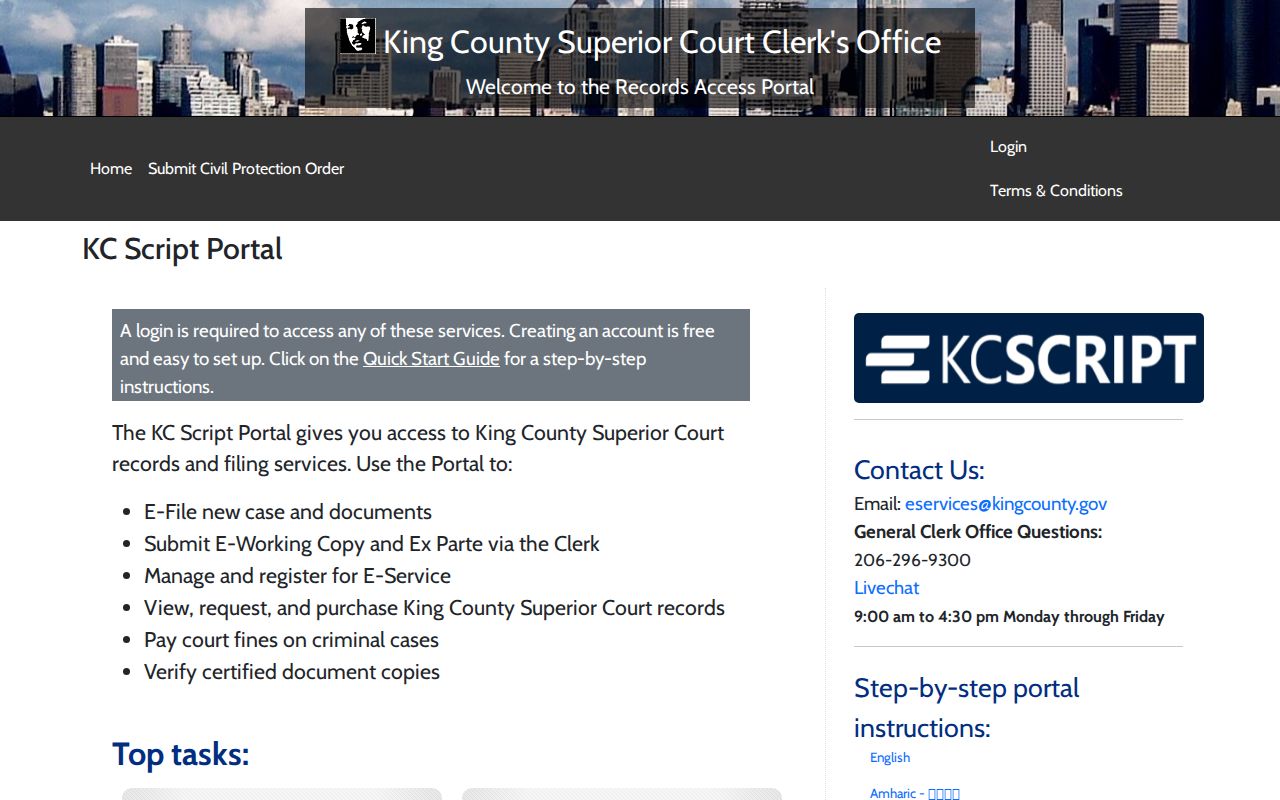
This local portal sits outside the Odyssey index. The clerk there keeps the court's official register and records, so the case information on it is the authoritative version. The Pierce County LINX search is a separate local entry point for Washington Superior Court case lookup.
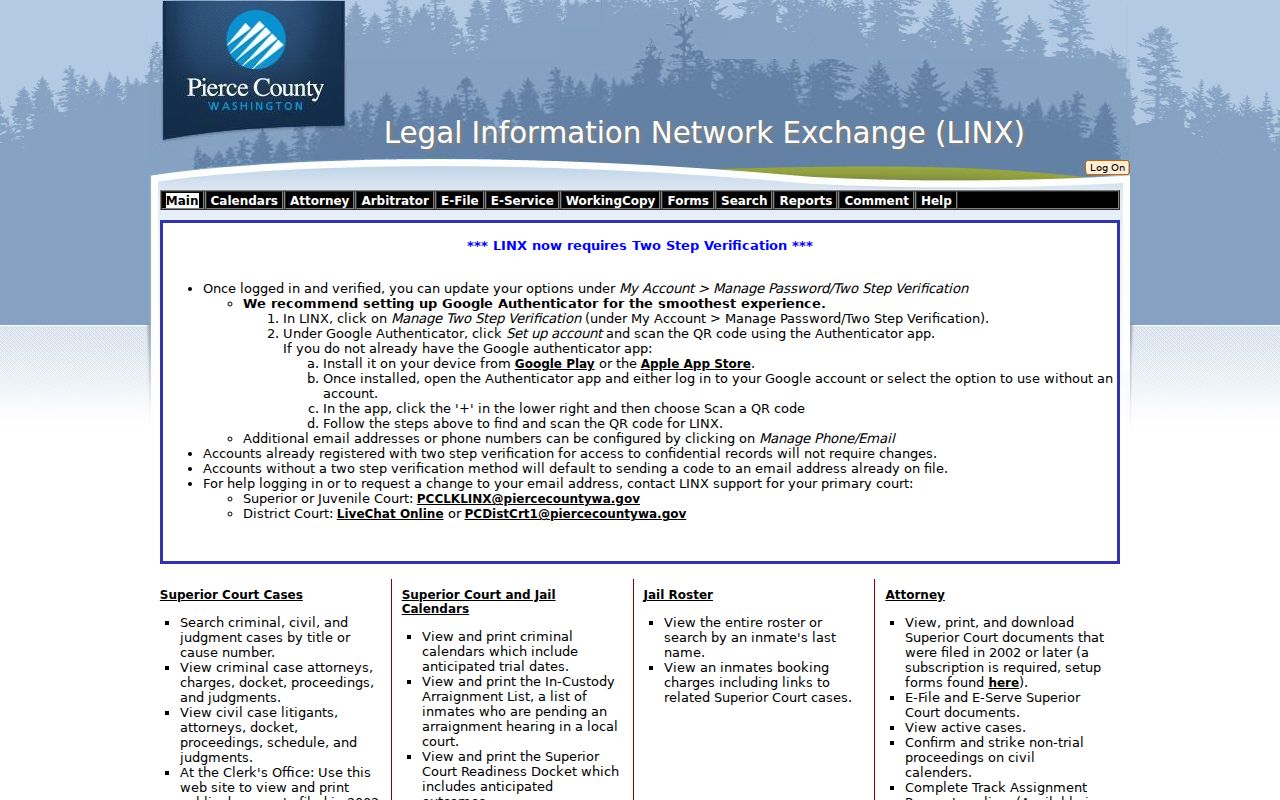
LINX lives outside Odyssey too. So to follow a Washington case past the statewide index, go with the court named on the notice and its local system.
How Washington Courts Went Digital
Washington court technology arrived in pieces. Find Your Court Date came first, in 2002, listing future District and Municipal proceedings. The AOC's Superior Court case-system project started in 2010. It put 37 counties on Odyssey. Clark and Spokane joined in November 2018, finishing the Odyssey implementation. King and Pierce kept their own systems.
Appellate e-documents became the official record in 2021. A free public portal followed in 2022 for qualifying cases. None of this merged Washington trial and appellate files. Court rules, local systems, and local custody still shape what the public sees. A newer Washington portal does not replace the older trial-court files held by the local clerk.
Washington Appellate Records Use a Separate Docket
An appeal opens its own record in Washington. The Superior Court register may show the notice of appeal, but the briefs, motions, orders, argument dates, and decisions all appear under a new appellate case number. Search only the trial case and you can miss everything after that. Clerks for the Washington Supreme Court and Court of Appeals maintain these appellate records. The Washington Court of Appeals public document search shows its appellate case-number lookup.
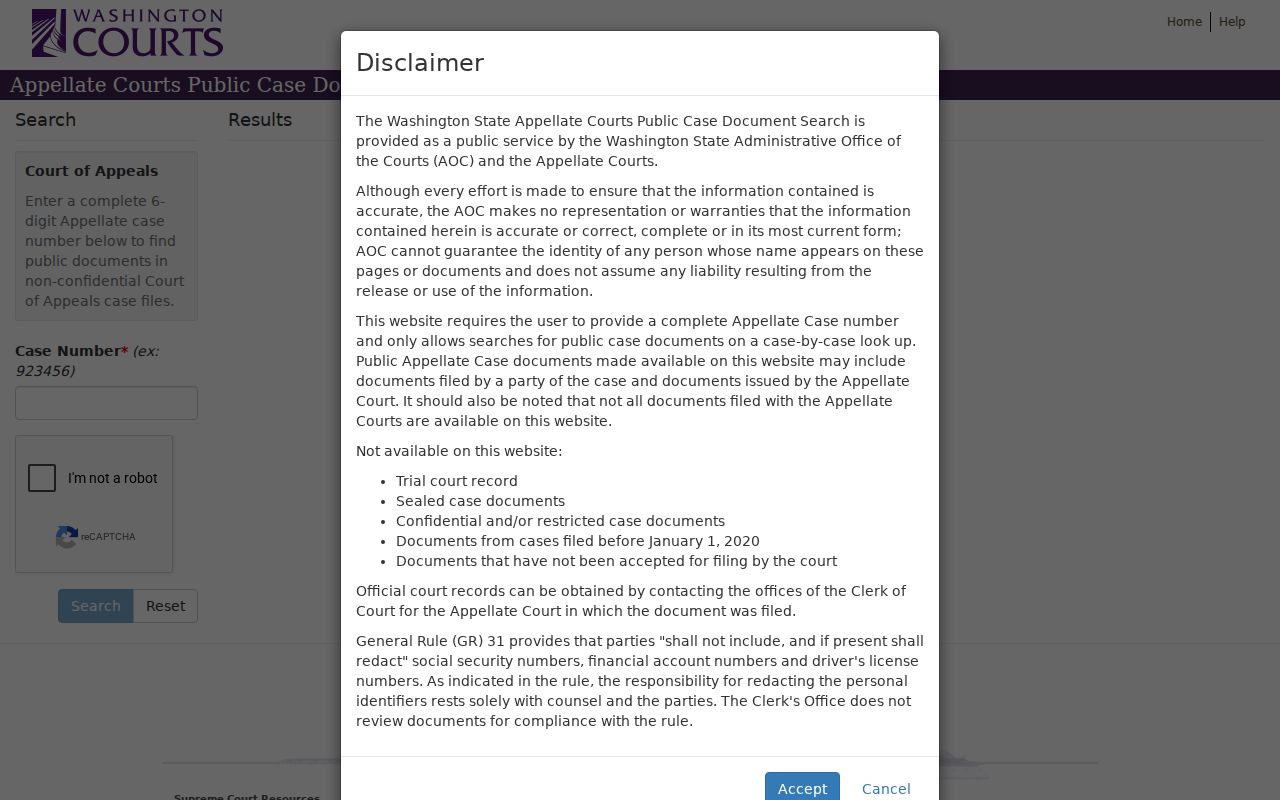
That search follows the Washington appellate cause, not the trial-court register. The separate Washington Supreme Court public document search covers cases before the state's highest court.
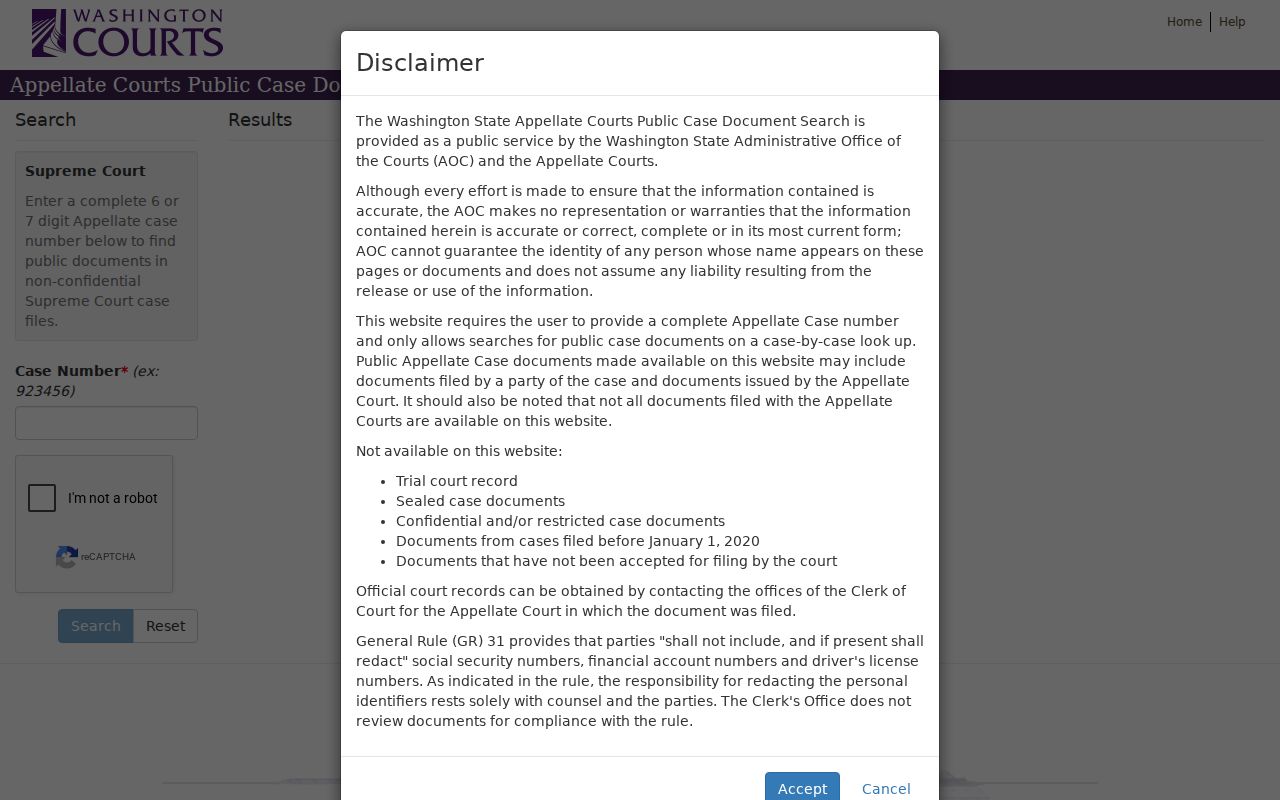
Both Washington searches are free and need no registration. You will need an appellate case number. They cover public electronic documents filed from January 1, 2020 forward, leave out sealed or confidential material, and do not link back to the Washington trial file. For an older record or an official copy, call the appellate clerk.